China’s Autonomous Parking and EV Charging Infrastructure

Building the Foundation of Self-Service Urban Mobility Systems

China’s urban mobility landscape is undergoing a structural transformation. What was once a fragmented system of parking facilities, EV charging stations, and traffic management infrastructure is rapidly evolving into an integrated, self-service mobility ecosystem.

At the core of this transformation is the convergence of autonomous parking (AVP), EV charging infrastructure, V2G energy systems, and AI-driven urban mobility platforms.

By 2025, China has established itself as the world’s largest EV charging market, with over 20 million charging facilities nationwide, including approximately 4.7 million public chargers and more than 15 million private units, reflecting an unprecedented level of infrastructure penetration in urban environments.Xinhua

This scale is not only quantitative—it is structural. It is reshaping how vehicles interact with cities, energy systems, and digital infrastructure.

1. The Infrastructure Backbone: Scale and Market Expansion

China’s EV charging infrastructure represents one of the fastest-growing physical-digital infrastructure systems globally.

According to industry estimates, the market size of EV charging infrastructure in China is expected to reach USD 37.6 billion by 2026, with a projected compound annual growth rate (CAGR) of approximately 46.9% through 2031.Data

At the policy level, China is targeting a 2:1 vehicle-to-charger ratio by 2025, with a long-term ambition of approaching a 1:1 equilibrium by 2030, signaling a transition from supply-constrained infrastructure to demand-balanced deployment.

This expansion is supported by a multi-layered deployment strategy:

  • Urban fast-charging networks
  • Highway corridor charging systems
  • Residential and community-based charging integration

The result is not simply infrastructure expansion, but the creation of a nationwide distributed energy access network for mobility systems.

2. Autonomous Valet Parking (AVP): The Emergence of Machine-Orchestrated Parking Systems

One of the most significant shifts in urban mobility is the rise of Autonomous Valet Parking (AVP) systems.

AVP enables vehicles to self-navigate into parking structures without human intervention, leveraging:

  • Low-speed autonomous driving (L2+ to L4 transition)
  • AI-based spatial recognition
  • Infrastructure-assisted localization systems

Asia-Pacific, particularly China, is currently the fastest-growing region for AVP deployment and testing environments. Market projections estimate AVP-related systems to reach approximately USD 460 million by 2026, driven by increasing demand for automated parking solutions in dense urban environments.

In advanced deployments, AVP systems are increasingly integrated with charging infrastructure, enabling a continuous flow:

Vehicle arrival → autonomous parking → automated charging → digital payment → autonomous exit

This creates a closed-loop mobility service model, reducing human dependency in parking operations.

3. EV Charging Meets Energy Systems: The Rise of V2G Integration

Beyond charging infrastructure, China is actively advancing Vehicle-to-Grid (V2G) systems, positioning EVs as distributed energy assets rather than passive consumers.

Pilot programs have been approved in approximately nine cities across China, involving over 30 V2G demonstration projects.

The long-term objective is to establish a standardized V2G ecosystem by 2030, enabling:

  • Grid load balancing through EV batteries
  • Peak shaving and demand response optimization
  • Integration of renewable energy sources into mobility systems

Research indicates that EV charging infrastructure is increasingly being repositioned as part of the smart grid architecture, rather than standalone transportation support systems.

This shift introduces a new layer of complexity:

Charging infrastructure becomes part of national energy management systems.

4. Automation Layer: Charging Robotics and C-V2X Integration

China is also exploring the integration of robotic charging systems and C-V2X (Cellular Vehicle-to-Everything) communication technologies, which enable end-to-end automation in mobility environments.

Key developments include:

  • Automated charging robots capable of physical plug-in operations
  • High penetration of C-V2X-enabled vehicles (targeting ~50% of new vehicles in 2025)
  • Integration of 5G-enabled infrastructure for real-time vehicle coordination

This enables a fully automated sequence:

autonomous parking → robotic charging → automated billing → vehicle retrieval

Such systems represent the early formation of what can be described as machine-orchestrated urban mobility infrastructure.

5. Case Studies: Industrial Ecosystem Development

China’s autonomous mobility ecosystem is supported by several key industrial players:

Baidu Apollo

Baidu’s Apollo platform has deployed large-scale autonomous driving and Robotaxi operations across multiple cities, integrating AI mobility services with urban infrastructure.

WeRide 

WeRide has demonstrated significant revenue growth driven by L4 autonomous vehicle deployment and mobility data services, highlighting commercial viability beyond pilot testing phases.

These companies illustrate the transition from experimental autonomous systems to commercial urban mobility operations.

6. Strategic Challenges for Global Stakeholders

Despite rapid advancement, several structural challenges remain relevant for international stakeholders:

1. Standardization and Interoperability

Differences between China’s GB/T charging standards and international CCS2 systems create integration barriers for global OEMs and infrastructure providers.

2. Monetization Model Evolution

The revenue structure of EV infrastructure is shifting:

  • From static charging fees
  • To dynamic pricing models including:
    • grid balancing incentives
    • parking premium services
    • energy arbitrage mechanisms

3. System Complexity

Integration of AVP, V2G, and C-V2X introduces significant system complexity requiring coordination between automotive, energy, and telecommunications sectors.

Conclusion: Toward a Unified Self-Service Mobility Ecosystem

China’s approach to autonomous parking and EV charging infrastructure represents a broader shift from traditional transportation infrastructure toward integrated, self-operating urban mobility systems.

The convergence of:

  • autonomous parking systems
  • intelligent charging networks
  • vehicle-grid integration
  • robotic service automation

is creating a foundational model where vehicles are no longer simply transported objects, but active participants in a machine-coordinated urban energy and mobility network.

For global stakeholders—including OEMs, energy companies, and smart city integrators—this transformation signals both a technological benchmark and a potential blueprint for future urban mobility systems.

More information

TingTing Yang

NRF APAC 2026 and Computex 2026: Two Different Views of Asia’s AI Future

NRF APAC vs COMPUTEX

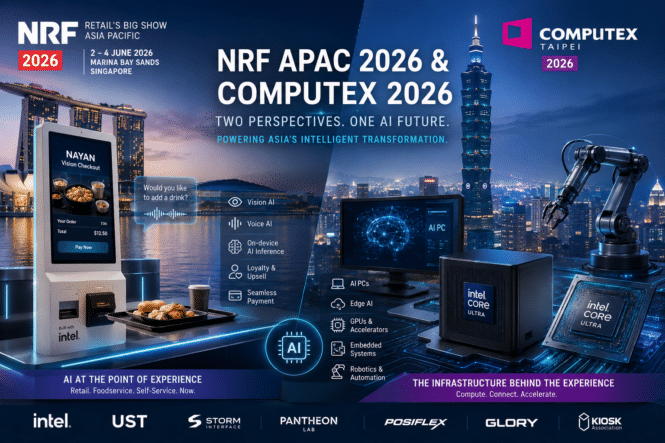
June 2026 will place Asia at the center of two major technology conversations. In Singapore, retail leaders, kiosk vendors, AI software companies, and self-service innovators will gather at NRF 2026: Retail’s Big Show Asia Pacific. At nearly the same time in Taipei, the global computing industry will converge at Computex 2026 to showcase the next generation of AI infrastructure, edge computing, semiconductors, and intelligent devices.

Although both events are rooted in AI transformation, they represent two very different perspectives on the future of technology in Asia.

NRF APAC focuses on how AI is changing customer-facing operations today — retail automation, foodservice workflows, digital commerce, kiosks, accessibility, and intelligent checkout systems. Computex, meanwhile, represents the foundational layer underneath those experiences: processors, AI PCs, GPUs, edge AI architectures, robotics, and embedded systems powering the next generation of enterprise technology.  https://kioskindustry.org/nrf-singapore/

Together, the two events tell a larger story about how AI is moving from infrastructure to real-world deployment.

NRF APAC 2026: AI at the Point of Experience

Held from 2–4 June 2026 at Marina Bay Sands, NRF APAC 2026 carries the theme “The Next Now,” positioning itself as the meeting point for retail innovation across the Asia-Pacific region.

The event reflects a broader shift happening throughout retail and hospitality: AI is no longer experimental. It is increasingly operational.

This year’s exhibitor lineup highlights how retailers are deploying AI directly into customer interactions and store operations:

  • UST Vision Checkout — Built on AI. Designed for impact. From AI models that learn to agents that act, UST technology solutions reimagine the enterprise, creating an intelligent  foundation for an adaptive and responsible AI ecosystem with lasting business impact. Let’s build the future of AI together.
  • Storm Interface – Keymat — Storm Interface designs and manufactures accessible, rugged human interface devices and self-service hardware, including ADA and EAA compliant keypads for kiosks and other public-use systems. Founded in 1986 in the UK, the company is recognized globally as a strategic accessibility partner, helping organizations deliver inclusive self-service experiences for people with disabilities.
  • Pantheon Creatives Pte Ltd — We at Pantheon Lab Ltd. push the boundaries of reality. As a seasoned startup, we strive to foster creativity via the use of deep learning technologies that empower our clients to visualize and intellectualize their virtual machines. Bringing digital human synthesis to the mainstream, we help content creators and companies to shape a more creative and innovative media and marketing landscape.
  • panachedigilife.com – Panache is a leader in the new-age AI & IOT technology solutions with a vision to align & utilize the ‘Make in India’ and ‘Atmanirbhar’ policy of the Government of India in the ICT & IOT Electronics domain. Panache offers solutions around Smart Computing Devices, Smart & AI based Digital Classrooms, Smart Asset Management, Retail IoT, Healthy Living Solutions, AV Display and Pen Display Solutions and other contract manufacturing OEM/ODM. Panache is an ICT & IoT devices design, manufacturing, distribution & services company with a vision of ‘Making Human Life Easy’ by way of constantly innovating in the space of technology.
  • Intel
  • More
  • POSIFLEX
  • GLORY

The show floor itself demonstrates where retail technology is heading: toward intelligent self-service systems capable of combining computer vision, conversational AI, automation, and edge inference into a single customer experience.

One of the notable demonstrations at the event will be NAYAN, a voice AI-enabled Vision Checkout platform developed by UST with Intel.

Built for foodservice environments, the platform combines:

  • Computer vision for tray and item recognition
  • Voice AI for customer interaction
  • On-device AI inference powered by Intel Core Ultra processors
  • Loyalty, upsell, modification, and payment workflows within a single interaction

The system is designed specifically for high-throughput retail and foodservice environments such as:

  • Quick-service restaurants
  • Mall food courts
  • Corporate cafeterias
  • Convenience retail formats

Rather than presenting AI as a future concept, NRF APAC increasingly showcases AI systems already designed for live deployment.

Computex 2026: The Infrastructure Behind the Experience

While NRF APAC focuses on operational deployment, Computex 2026 is expected to focus on the technologies enabling those deployments at scale.

Historically, Computex has served as one of Asia’s most important stages for:

  • AI PCs
  • Edge AI systems
  • GPUs and accelerators
  • Industrial computing
  • Embedded platforms
  • Robotics
  • Intelligent displays
  • Smart city infrastructure

If NRF APAC demonstrates how AI appears in stores, restaurants, and kiosks, Computex demonstrates the silicon, compute architectures, and edge hardware making those systems possible.

This contrast is especially relevant in 2026 because the industry is entering a new phase of AI adoption:

  • 2023–2024 focused on generative AI experimentation
  • 2025 focused on enterprise pilots
  • 2026 is increasingly about operational deployment at scale

That shift places edge computing at the center of both events.

Retailers now want AI systems that are:

  • Faster
  • More private
  • Lower latency
  • More resilient
  • Less dependent on cloud connectivity

This is why on-device AI inference and edge AI architectures are becoming central themes across both NRF APAC and Computex.

Intel’s Position Across Both Shows

One of the more interesting overlaps between the two events is the growing role of Intel in connecting AI infrastructure with real-world deployment.

At Computex, Intel’s messaging will likely center around:

  • AI PCs
  • Core Ultra processors
  • Edge AI acceleration
  • Enterprise compute platforms
  • Industrial AI architectures

At NRF APAC, those same technologies appear in practical retail applications.

The UST NAYAN platform is a strong example of this transition from infrastructure to operational AI:

  • AI models operating directly at the edge
  • Real-time inference on production hardware
  • Vision AI integrated into checkout workflows
  • Conversational AI layered into customer interaction

This reflects a broader industry trend where AI hardware vendors are no longer selling only compute performance. Increasingly, they are demonstrating complete operational ecosystems.

Accessibility and Human-Centered Self-Service

Another important theme emerging from NRF APAC 2026 is accessibility.

Storm Interface will showcase rugged, accessible self-service hardware including ADA- and EAA-compliant keypads designed for kiosks and public-use systems. The company has become increasingly relevant as retailers and public venues rethink how self-service experiences accommodate broader customer needs.

Notably, Keymat will also be showing LG kiosk hardware integration at the event, highlighting how accessibility, kiosk design, and AI-enabled interaction are increasingly converging into a single deployment strategy.

This human-centered approach creates an interesting contrast with Computex:

  • Computex emphasizes performance, architecture, and scalability
  • NRF APAC emphasizes usability, deployment, and customer interaction

Together, they illustrate how AI maturity now depends as much on experience design as raw compute power.

Asia’s Expanding Role in AI Deployment

Both events also reinforce Asia’s growing importance in the global AI economy.

Singapore has become a strategic hub for:

  • Retail innovation
  • Smart city initiatives
  • Enterprise AI deployment
  • Digital infrastructure investment

Taiwan remains central to:

  • Semiconductor manufacturing
  • AI hardware
  • Edge computing
  • Global supply chains

The proximity of NRF APAC and Computex on the June calendar effectively creates a two-week snapshot of where enterprise AI is heading across the region.

One event focuses on the customer experience layer.

The other focuses on the compute layer underneath it.

Together, they reveal how quickly AI is moving from concept to operational reality across Asia-Pacific industries.

More Information


TingTing Yang

Shenzhen Kiosk OEM & ODM Providers: How to Pick the Right Manufacturing Partner

shenzen partners

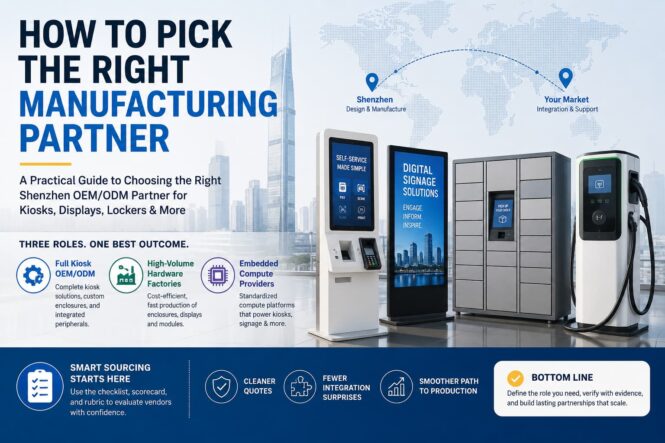
How to Pick the Right Manufacturing Partner

Kiosks are just one slice of the global OEM/ODM universe. So are:

  • LCDs and touchscreens (many “US-branded” panels are actually designed and built in China, then labeled and supported locally).

  • Devices of all types (POS, media players, payment terminals, ticketing, sensors) assembled into finished systems in the US.

  • Lockers for pickup, parcel, and food; large brands such as Amazon, USPS, and big-box retailers source lockers from Chinese factories and then integrate them domestically.

  • EV charging housings and subassemblies, with enclosures and modules built in China and final assembly/testing done in the US or EU.

In many projects, “the US manufacturer” is really:

  • A systems integrator assembling imported enclosures, displays, and electronics.

  • A brand that owns design, compliance, and support while the heavy manufacturing is done in Shenzhen, Dongguan, or similar hubs.


Three Roles To Separate When You Source From Shenzhen

When you work in Shenzhen, it helps to keep three roles distinct instead of letting vendors blur everything together in their marketing:

  • Full kiosk OEM/ODM manufacturers

    • Build the entire unit: enclosure, display, touch, peripherals, and final assembly.

    • Good when you want a branded kiosk or locker that arrives “nearly finished” and you handle software and service.

  • High‑volume OEM/ODM hardware factories

    • Optimized for cost, speed, and throughput; strong on enclosures, displays, and standard modules.

    • Best if you are an integrator or US brand with your own software, certifications, and lifecycle plan.

  • Embedded compute providers

    • Supply the compute “brain” that goes into kiosks, signage, lockers, and EV chargers.

    • Ideal when you want a consistent PC/media‑player platform across multiple enclosure vendors and use cases.


Here are examples of Shenzhen-linked providers profiled on KioskAsia.org:

  • BestKiosk – full custom kiosk OEM/ODM

    • Shenzhen-based manufacturer focused on custom self-service kiosks, digital signage systems, and payment kiosks.

    • Emphasizes custom enclosures, industrial design, modular peripheral integration (payments, scanners, RFID, printers, biometrics), and project-style OEM/ODM work.

    • Strong fit when you want a partner that leans into tailored projects rather than catalog hardware.

  • Giada (Shenzhen JIEHE Technology) – embedded compute layer

    • Designs embedded PCs, media players, and edge AI boxes that power kiosks, digital signage, and HMI endpoints.

    • Acts as the standardized compute layer beneath your kiosk UI and application stack, improving fleet consistency and rollout planning.

    • Well suited when you source enclosures from one or more OEMs but want a single compute platform.

  • Star Vision LCD – high‑volume kiosk/display OEM/ODM

    • Shenzhen-based OEM/ODM manufacturer for self-service kiosks, digital signage, and interactive flat panels, with manufacturing in Dongguan and 100k+ units annual capacity.

    • Competes on cost efficiency, customization, and speed to delivery (often in the 7–15 day range for common configurations).

    • Best fit when you manage your own software, compliance, and lifecycle planning and want a fast, cost‑sensitive hardware producer.

From our NRF Singapore post

Exhibitors
  • UST Vision Checkout — Built on AI. Designed for impact. From AI models that learn to agents that act, UST technology solutions reimagine the enterprise, creating an intelligent  foundation for an adaptive and responsible AI ecosystem with lasting business impact. Let’s build the future of AI together.
  • Storm Interface – Keymat — Storm Interface designs and manufactures accessible, rugged human interface devices and self-service hardware, including ADA and EAA compliant keypads for kiosks and other public-use systems. Founded in 1986 in the UK, the company is recognized globally as a strategic accessibility partner, helping organizations deliver inclusive self-service experiences for people with disabilities.
  • Pantheon Creatives Pte Ltd — We at Pantheon Lab Ltd. push the boundaries of reality. As a seasoned startup, we strive to foster creativity via the use of deep learning technologies that empower our clients to visualize and intellectualize their virtual machines. Bringing digital human synthesis to the mainstream, we help content creators and companies to shape a more creative and innovative media and marketing landscape.
  • panachedigilife.com – Panache is a leader in the new-age AI & IOT technology solutions with a vision to align & utilize the ‘Make in India’ and ‘Atmanirbhar’ policy of the Government of India in the ICT & IOT Electronics domain. Panache offers solutions around Smart Computing Devices, Smart & AI based Digital Classrooms, Smart Asset Management, Retail IoT, Healthy Living Solutions, AV Display and Pen Display Solutions and other contract manufacturing OEM/ODM. Panache is an ICT & IoT devices design, manufacturing, distribution & services company with a vision of ‘Making Human Life Easy’ by way of constantly innovating in the space of technology.

Choose a Shenzhen OEM/ODM partner based on what you truly need—full kiosk manufacturing, fast and cost-efficient hardware production, or a standardized compute platform to power your kiosk designs. When those roles are clear, you’ll get cleaner quotes, fewer integration surprises, and a smoother path to production.

How To Choose the Right Shenzhen OEM/ODM Partner (Checklist)

  1. Define your build type

    • Need a full kiosk (enclosure + display + peripherals)? Start with a BestKiosk‑type manufacturer.

    • Need hardware-only production at speed/cost while you own software and service? Look at Star Vision‑type OEM/ODM factories.

    • Need a standardized compute platform across kiosk, signage, and locker designs? Add a Giada‑type embedded compute provider.

  2. Lock your peripheral stack early

    • Payments, receipt printing, barcode/RFID, cameras/biometrics: insist on confirmed mechanical mounting, power budgets, OS/driver support, and field serviceability up front.

    • Make vendors show you existing builds with your target peripherals or close equivalents, not just spec sheets.

  3. Design for deployment reality, not the catalog

    • Indoor vs outdoor, vandal resistance, thermal design, and maintenance access should be designed before you quote volume production.

    • Ask where the hardware has actually shipped (country, climate, use case) and what service or failure data the factory can share.

  4. Clarify who owns certifications and lifecycle

    • Decide whether the Shenzhen factory, the US “assembler,” or your team owns safety marks, ADA/accessibility compliance, and long‑term spare availability.

    • Push for defined availability windows on key components (panel, PC, payment, printer), plus a plan for next‑gen substitutions.

  5. Separate “factory” from “brand” in your cost model

    • Recognize that many “US manufacturers” are assembling or re‑branding Shenzhen‑built enclosures, displays, and electronics.

    • Compare: direct factory pricing plus your integration costs vs going through a domestic OEM that adds value on design, compliance, and service.


Bottom Line

      • Pick a Shenzhen OEM/ODM partner based on what you truly need: full kiosk manufacturing, fast and cost‑efficient hardware production, or a standardized compute platform to power your designs.

      • When those roles are clear, you get cleaner quotes, fewer integration surprises, and a much smoother path from prototype to production.

      • Workbook with a scorecard, evidence matrix, rubric, RFQ checklist, and source sheet.
Craig Allen Keefner

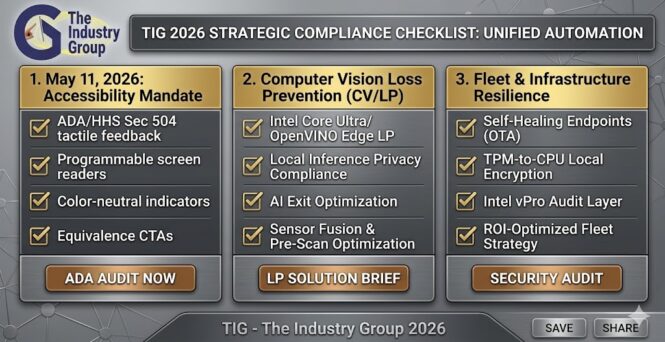
2026 Strategic Compliance Checklist

In 2026, compliance is no longer a legal review process—it is a system architecture decisionOrganizations deploying kiosks, self-checkout, or unattended retail must now design for accessibility, AI-driven loss prevention, and zero-trust security from day one.

This checklist is not theoreticalIt reflects what regulators, auditors, and operations teams will actually enforce in production environments.

The 2026 compliance landscape has moved from “best practice” to legal mandate, with a specific focus on two areas: the May 11, 2026, HHS Section 504 deadline and the shift toward Computer Vision (CV) as the standard for loss prevention.

Below is the consolidated 2026 Strategic Compliance Checklist derived from recent industry guides and regulatory updates.

  • “2026 compliance = accessibility + edge AI + zero trust”
  • “Design-time requirement, not retrofit”
  • “Failure = legal exposure + operational breakdown”

1 Healthcare & Public Access (The May 11 Deadline)

The HHS Section 504 rule is the most immediate regulatory hurdle for organizations with 15+ employees.

  • [ ] Tactile Integration: Kiosks must be operable by keyboard or tactile input alone; scheduling and payment interfaces cannot rely on touch-only or mouse-driven flows.

  • [ ] Non-Visual Feedback: Images, diagrams, and status indicators (like error alerts) must have meaningful audio descriptions or “programmatically associated” labels for screen readers.

  • [ ] Color Neutrality: Critical information (e.g., “Required Field” or “Transaction Failed”) cannot be conveyed by color alone (e.g., just turning the box red).

  • [ ] Privacy Equivalence: Alternative procedures for those who cannot use a kiosk must afford the same level of confidentiality and convenience as the digital transaction.

2 Retail Shrink & AI Loss Prevention (The “Edge AI” Standard)

Retail shrink—now exceeding $100B annually—has moved Computer Vision from pilot to required infrastructure.

  • [ ] Sensor Fusion (The “Anti-Swap” Protocol): Move beyond simple weight scalesSystems must now integrate CV with transactional data to detect “ticket switching” or “mismatched item” events in real-time.

  • [ ] Local Inference (Privacy Compliance): To meet 2026 data privacy standards, CV must run on Edge AI hardware (e.g., Intel Core Ultra with OpenVINO)PHI and biometric data should be processed on the device, not streamed to the cloud.

  • [ ] AI Exit Compatibility: Packaging and labeling must be optimized for “Scan & Go” AI exit systems to reduce manual employee checks at the door.

  • [ ] “Pre-Scan” Optimization: Ensure kiosk workflows are compatible with “pre-scan” technologies used by staff to assist high-volume checkout zones.

3 Operational Resilience & Security

With $400B in annual downtime losses, “Infrastructure-Grade” kiosks must meet new Resilience Standards.

  • [ ] Self-Healing Endpoints: Kiosks must be configured with “Persistence” technology that allows security software to autonomously reinstall or repair itself if tampered with physically or remotely.

  • [ ] Zero-Trust Policy Sync: Fleet management (UEM) must enforce identical security and accessibility configurations across the entire fleet (Windows, Android, or iPadOS) over-the-air (OTA).

  • [ ] TPM-to-CPU Encryption: Protect against “bus attacks” on unattended terminals by ensuring hardware-level encryption of the link between the Trusted Platform Module and the CPU.

    • Pro Tip — If you spec Dell / HP / Lenovo inside kiosks:
      • You are almost always getting firmware TPM
      • You don’t control TPM vendor anymore

      If you need:

      • FIPS certification
      • Hardware isolation
      • High-assurance identity

      Then you must explicitly spec:

      • Industrial board (Advantech, AAEON, etc.)
      • With Infineon / Nuvoton discrete TPM
    • Discrete TPM (Infineon, Nuvoton, ST) — Was the Default:

      • Still critical
      • But now only in regulated, embedded, or long-lifecycle deployments

Top 4 Failure Modes (2026)

  • Retrofitting accessibility instead of designing it in
  • Cloud-dependent AI violating privacy expectations
  • Consumer hardware deployed in 5–7 year lifecycle environments
  • Inconsistent fleet configurations breaking compliance at scale

Intel-Specific Hardware Update

Intel’s “Store-in-a-Box” reference architecture is now the benchmark for this checklistBy utilizing the vPro management layer, operators can remotely audit a fleet’s ADA Compliance state and AI Inference health without a truck roll—a critical requirement for 2026 ROI.

Intel’s “Store-in-a-Box” (also referred to as the Autonomous Micro-Store architecture) is a modular, high-performance edge computing framework designed to convert traditional retail spaces into fully automated, “frictionless” environments.

Rather than relying on a massive, expensive cloud-based backend, this architecture pushes the “intelligence” to the physical store itself.

Core Components of the Architecture

  1. High-Performance Edge Nodes: The system is anchored by Intel Core Ultra or Xeon processors located on-siteThese provide the raw horsepower needed to handle hundreds of data streams simultaneously without the latency issues of the cloud.

  2. Intel OpenVINO Toolkit: This is the “brain” of the operationIt allows the store to run complex Computer Vision (CV) models to track customer movement, identify products being picked up, and manage real-time inventoryIn 2026, this is the primary tool for catching “ticket switching” or mis-scans at self-checkout.

  3. Intel vPro Technology: For the operator, this is the management layerIt allows for remote, hardware-level management of the entire storeIf a kiosk or sensor fails, IT can power-cycle or repair the software “out-of-band” without sending a technician to the physical site.

  4. Sensor Fusion: The architecture integrates data from multiple sources—including weight sensors on shelves, 3D LiDAR, and overhead cameras—to create a unified “event” (e.g., “Customer A put an Apple in their bag”).

Priority Stack for 2026:

  1. Section 504 Accessibility (Deadline-driven)
  2. Edge AI + Privacy (Regulatory + operational)
  3. Security + Zero Trust (Risk mitigation)
  4. Hardware architecture (Long lifecycle support)

Executive Roll-Up

✅ TRUE MANDATORY (2026 enforcement)

  • Accessibility (all 4 items)
  • Privacy (if regulated data present)

⚠️ CONDITIONAL MANDATORY (depends on environment)

  • Local AI inference (privacy-driven)
  • Zero-trust fleet enforcement
  • TPM-level hardware security

🔵 EMERGING STANDARD (fast becoming required)

  • Sensor fusion (retail shrink)
  • Self-healing endpoints

🟡 BEST PRACTICE (optimization layer)

  • AI exit compatibility
  • Pre-scan workflow alignment


Craig Allen Keefner

Autonomous Shopping Malls: The Future of Retail in China

shopping mall

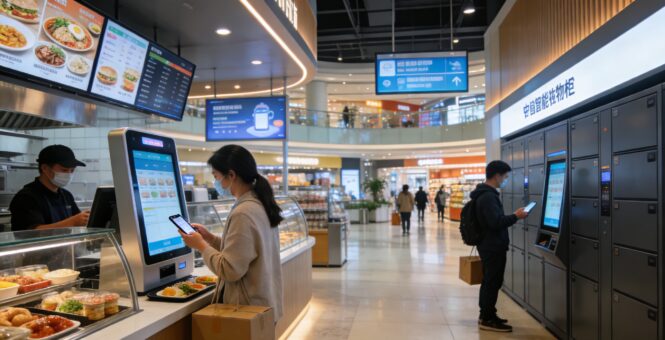
The China shopping mall is rapidly evolving into autonomous shopping malls and autonomous commercial ecosystems, powered by advanced digital retail infrastructure in China.

These new-generation smart malls in China are no longer traditional retail spaces. Instead, they are becoming fully integrated, system-driven environments where consumers can complete the entire shopping journey through self-service retail systems and digital automation.

Insight by Intel

By Craig Keefner
TingTing’s report highlights a fundamental divergence: while Western retail often views self-service as isolated hardware placements, China is treating the entire shopping mall as a singular, automated operating system.

The technical takeaway is the shift toward Infrastructure-level Digitization. It’s no longer just about a kiosk; it’s about the integration of edge computing—specifically high-performance chips like the Intel Core Ultra—with multi-sensor AI to manage the entire journey. For the US and EU markets, ROI won’t come from hardware alone, but from how well these systems talk to each other.

In a modern autonomous shopping mall, consumers can:

No queues. No manual checkout. No friction. Only seamless automation powered by infrastructure.

1. From Retail Space to Digital Infrastructure

The rise of e-commerce has fundamentally challenged traditional malls. To remain competitive, physical retail must evolve beyond being a transactional space.

According to McKinsey & Company, China’s retail sector is shifting from front-end digitization to full-chain digital transformation, where physical stores are no longer just points of sale but are transforming into:

  • Experience centers
  • Fulfillment hubs
  • Data-driven infrastructure nodes

At the same time, research from McKinsey Global Institute suggests that digital technologies could contribute 7%–22% of China’s GDP growth, fundamentally reshaping industries such as retail, logistics, and real estate.

Physical retail is no longer a channel—it is becoming infrastructure.

2. What Is an Autonomous Shopping Mall?

An Autonomous Shopping Mall is not defined by a single technology, but by the integration of multiple self-service systems into one seamless environment:

  • Self-service kiosks (ordering & payment)
  • Smart lockers (logistics & parcel pickup)
  • Digital signage (navigation & advertising)
  • Mobile payment ecosystems

Together, these components create a frictionless, system-driven retail experience.

This transformation aligns with the concept of “Great Retail Integration” proposed by McKinsey & Company—a model where online, offline, and logistics systems converge.

Mall = Infrastructure
Mall = Operating System

3.The Technology Stack Behind Automation

Autonomous malls are built on a multi-layered technology foundation combining AI, IoT, sensors, and robotics.

AI & Multi-Sensor Systems

Autonomous retail environments rely on technologies such as:

  • Computer vision
  • RFID
  • Weight sensors
  • LiDAR

Research on autonomous retail systems (arXiv) shows that these technologies enable real-time perception and tracking of physical environments, though challenges remain in cost and scalability.

IoT and Data-Driven Operations

Studies on smart retail systems indicate that IoT devices:

  • Enable real-time data synchronization
  • Improve operational efficiency
  • Support system-wide coordination

However, key challenges include:

  • Data security
  • Device interoperability

Retail Robotics

Automation extends beyond customer-facing systems.

Research in retail robotics highlights growing use cases in:

  • Shelf replenishment
  • Warehouse automation
  • In-store logistics

This effectively transforms shopping malls into micro-fulfillment centers.

Edge Computing (Mini PCs)

To support real-time decision-making, malls deploy:

  • Edge computing devices
  • Embedded AI systems

These systems reduce latency and allow on-site processing, which is essential for autonomous environments.

4. Real-World Adoption in China

Commercial Real Estate Transformation

Leading developers such as Wanda Group are driving the transition toward smart malls by:

  • Digitizing operations
  • Integrating intelligent systems
  • Enhancing infrastructure capabilities

Shopping malls are evolving from “space leasing” businesses into digital operating platforms.

Platform Ecosystems

Technology companies are accelerating this shift.

These platforms are turning physical retail into nodes within a larger supply chain network.

5. Why It Works in China

China’s rapid adoption of autonomous malls is driven by several structural advantages:

1. Ubiquitous Mobile Payment

Cashless transactions are already the norm.

2. High Digital Adoption

Consumers are highly accustomed to:

  • QR codes
  • Self-service systems
  • App-based ecosystems

3. Infrastructure-Level Digitization

Supported by insights from McKinsey Global Institute, China’s approach differs from Western markets:

  • China builds integrated systems
  • Western markets often focus on isolated optimizations

China = System-level automation
West = Feature-level innovation

6. Challenges

Despite strong momentum, several challenges remain.

Digital Divide

Elderly populations may struggle with fully automated environments.

Cost and ROI

According to McKinsey & Company85% of retailers have yet to fully realize returns on their digital investments.

System Integration

  • Hardware fragmentation
  • Software compatibility issues

The future of autonomous malls will depend on standardization and cost optimization.

7. The Future of Retail Infrastructure: Great Retail Integration in China

China is moving toward a highly integrated retail ecosystem—what McKinsey & Company defines as:

“Great Retail Integration”

A system where:

  • E-commerce
  • Physical retail
  • Logistics
  • Social commerce

are seamlessly interconnected.

In this model:

Malls are no longer destinations.
They are nodes in a network.

Shopping Mall Conclusion

Autonomous shopping malls represent a fundamental shift in the nature of retail.

From:
Physical consumption spaces

To:
Intelligent, automated, system-driven infrastructure

China is not simply digitizing retail—it is redefining what a shopping mall is.

More Shopping Mall Resources

TingTing Yang

National Restaurant Association Kiosk NRA

National Restaurant Show

Restaurant Kiosks, Digital Signage, AI

2026 

Last Updated on April 23, 2026 by Craig Allen Keefner

The Restaurant Tech Stack of 2026: Accessibility, Android, and the 30% Ticket Lift

Self-service has crossed the tipping point. In 2026, it is no longer just a labor mitigation strategy—it is a revenue optimization engine. Leading QSRs are achieving 20–30% higher average tickets through structured upselling, visual ordering, and AI-assisted recommendations that never forget to ask for the extra side.

The “2026 Stack” isn’t just a kiosk; it’s a coordinated ecosystem of Android edge computing, AI inference, universal accessibility, and payment orchestration. Operators who fail to design for this stack are designing for a market that no longer exists.


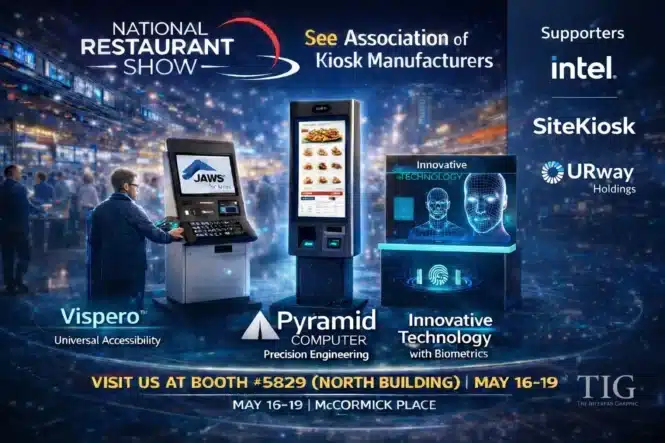
Experience the Future at Booth #5829

National Restaurant Association Show | May 16–19, 2026 McCormick Place, Chicago (North Building)

The Kiosk Association (KMA) and The Industry Group (TIG) are hosting the central hub for self-service innovation. Join us to see how world-class hardware and Conversational AI are transforming the guest experience.

Meet the Expert: 40-year industry veteran Craig Keefner is available for 1:1 strategy meetings. Compare global metrics across the US, Asia, and Europe and get your copy of our 2026 Strategic Compliance Checklist. Book a Private Briefing

Discount Passes — Yes, we always offer those. craigkeefner@pm.me

The Innovation Layers

NRA Innovation Layers

NRA Innovation Layers

Restaurant Reality Check (2026 Metrics)

The industry has shifted. If your metrics don’t align with these benchmarks, your tech stack is holding you back:

  • Digital Penetration: 35–45% of all orders are now digital.

  • Kiosk Adoption: 55–65% of top QSRs have fully deployed self-service.

  • Ticket Lift: Average increase of +20–30% via kiosk vs. cashier.

  • Labor Pressure: Labor now accounts for 30–35% of operating costs.

  • The “Store-in-a-Box”: 15–25% of new builds are pickup-first with minimal footprints.


💡 Emerging Trends to Watch

1. The Android Takeover

Android has become the default edge OS for restaurants. Its native support for NFC, biometrics, and mobile-first UX patterns has made it the primary choice for QSR innovation, while Windows shifts toward back-of-house legacy systems.

2. Invisible Payments

Payment is becoming a “system event” rather than a user step. Through license plate recognition, AI-linked apps, and tokenized identity, the “checkout” screen is disappearing in favor of frictionless, background transactions.

3. Accessibility as Growth

Accessibility (EAA/ADA) is no longer just about avoiding a lawsuit; it’s about market expansion. By integrating tools like Vispero’s JAWS screen reader, brands are capturing the loyalty of the 1 in 4 adults with disabilities.


Plan Your Visit

Ready to modernize? Text 720-324-1837 or email craig@industrygroup.org to schedule your booth tour.

===========================

2025

Are you looking for restaurant kiosk self-service technology? Here is our main NRA page and here is floorplan  #8030 at NRA show — Order station kiosks, menu boards, digital signage, POS payment options including biometrics and facial, lockers for hot or cold, EV charging, outdoor drive thru menu boards, regulatory ADA and ABA considerations, hardware, software, service and more. We are an association of over 50 companies and 700 listed companies with US, Europe and Asia coverage.

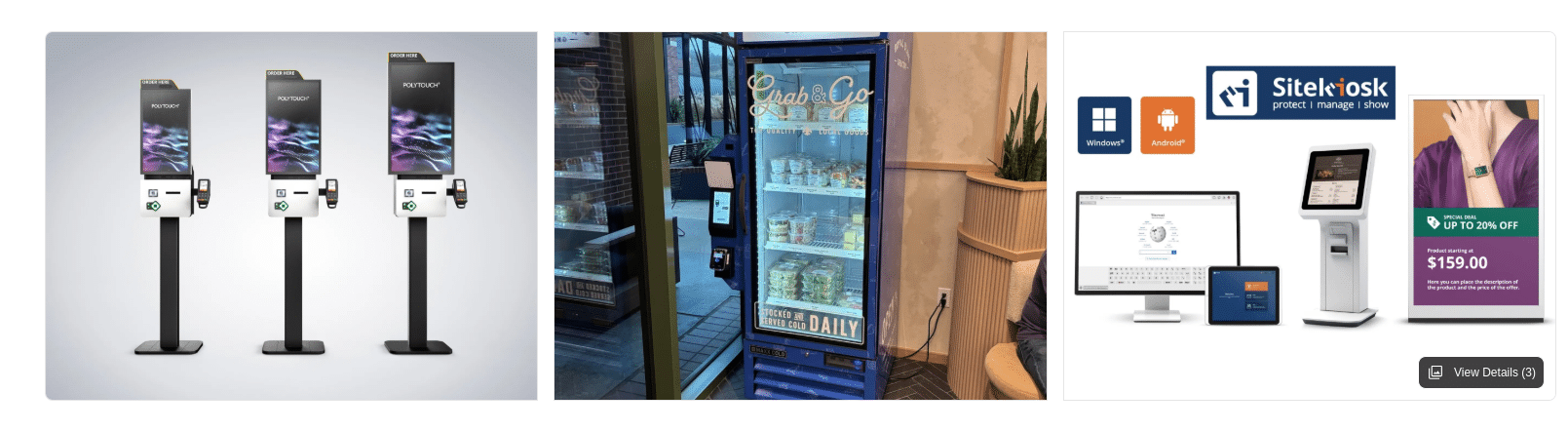
A collage of vending machine kiosks, highlighting self-service machines, a refrigerated drinks display with Grab & Go signage, and a digital kiosk featuring Windows and Android systems—all showcased at 9.00 as seen at the National Restaurant Associations event.

2025 Edition

Galleries


Craig Allen Keefner

China’s QR Code Economy Built the Perfect Environment for Self-Service

QR Code Payment Market

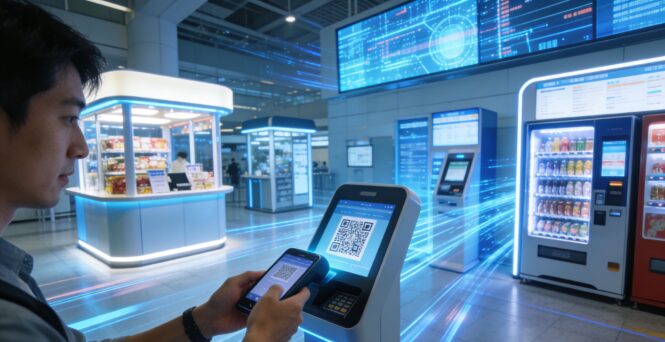
China has built the world’s most scalable self-service ecosystem—not because of superior hardware, but because of a frictionless QR code payment infrastructure led by Alipay and WeChat.

With QR payments deeply embedded into daily behavior, China has removed the biggest constraint in kiosk deployment: payment integration complexity.

The result is a high-growth, high-density self-service market that continues to outpace Western markets in speed, cost efficiency, and scalability.

 Payments + Self-Service Convergence

QR Code Payment Market (China)

  • 2024 market size: $692.5M
  • 2033 forecast: $3.4B
  • CAGR (2025–2033): 20%Grandview

Globally, QR payments are scaling rapidly, expected to grow from $12.5B (2024) to $61.7B (2033), with Asia-Pacific—led by China—holding the largest shareGrandview

Self-Service Kiosk Market (China)

  • 2024 market size: $3.03B
  • 2030 forecast: $6.37B
  • CAGR (2025–2030): 13.6%Grandview

China is already:

Core Insight: Payment Infrastructure = Deployment Speed

In Western markets, self-service deployment is constrained by:

  • EMV certification cycles
  • POS hardware costs
  • Banking integrations
  • PCI compliance

In China, QR payments eliminate all of the above.

Deployment Equation in China:

Display + QR Code + Mobile Wallet = Payment-enabled kiosk

This fundamentally changes the economics of self-service:

Factor Western Model China Model
Payment hardware Required Not required
Integration time Weeks–months Days
Cost per kiosk High Low
Maintenance Hardware-dependent Software-driven

Why China Scales Faster

1. Hardware Abstraction via QR Codes

QR codes turn payment into a software layer, not a hardware dependency.

  • No NFC readers required
  • No card terminals
  • No banking device approvals

This enables:

  • Rapid rollout of vending machines
  • Pop-up retail automation
  • Low-cost experimentation

2. Super-App Ecosystem Effects

WeChat and Alipay function as infrastructure platforms, not just wallets.

They integrate:

  • Identity (real-name systems)
  • Payments
  • Mini-programs (service layer)
  • Loyalty & CRM

This allows kiosks to become:

Nodes inside a broader digital ecosystem—not standalone endpoints

Example:

  • Scan QR → open mini-program → order → pay → receive → re-engage

3. Behavioral Standardization at Scale

China’s advantage is not just technology—but user habit uniformity:

  • QR scanning is universal behavior
  • Cash usage is minimal in urban environments
  • Even micro-merchants accept QR payments

This leads to:

  • Near-zero onboarding friction
  • High conversion rates on kiosks
  • Faster adoption of new formats

4. Cost Structure Enables Over-Deployment

Lower deployment cost = higher density.

Because QR-based kiosks:

  • Require less upfront investment
  • Have fewer failure points
  • Are easier to maintain

Operators can:

  • Deploy more machines per location
  • Test more formats (retail, healthcare, transit)
  • Iterate faster

This explains why China leads in:

  • Smart vending density
  • Unmanned retail pilots
  • Self-service healthcare and government terminals

5. Payment as a Growth Multiplier

QR payments are not just a feature—they are a growth multiplier:

  • Faster checkout → higher throughput
  • Lower friction → higher usage frequency
  • Integrated ecosystem → higher lifetime value

Globally, QR payments are growing at ~20% CAGR, largely driven by their low cost and ease of adoptionRISE

Strategic Implications for Industry Players

For Kiosk Manufacturers

For Operators

  • Payment friction directly impacts ROI
  • Markets with fragmented payment systems will face:
    • Slower rollout
    • Higher customer drop-off
    • Increased operational complexity

For Western Markets

To replicate China’s growth trajectory, key gaps must be addressed:

  • Fragmented payment systems (cards, wallets, apps)
  • Lack of universal QR adoption
  • Higher compliance and infrastructure costs

Until then, self-service growth will remain:

Capital-intensive, slower, and less scalable

Conclusion

China’s leadership in self-service is not driven by AI, robotics, or hardware innovation alone.

It is driven by a simple but powerful shift:

Turning payment into a low-cost, universal, software-defined layer

Through QR code payments powered by Alipay and WeChat, China has created:

  • The lowest-friction payment environment globally
  • The fastest deployment cycle for kiosks
  • The most scalable self-service ecosystem

For B2B players, the takeaway is clear:

Whoever controls the payment layer controls the speed of self-service adoption.

More Resources

TingTing Yang

Self-Service Government Terminals: China’s Digital Public Services
Self-Service-Government-Terminals

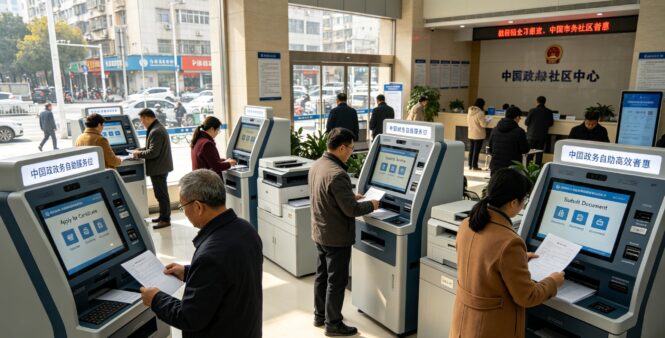
China has built one of the world’s most extensive networks of self-service government terminals, transforming how public services are delivered at scale.

These kiosks enable citizens to complete tasks such as identity verification, document processing, and payments without interacting with staff—turning government services into a distributed, always-on digital infrastructure.

According to the United Nations E-Government Survey 2022, China ranks among global leaders in digital public service delivery, reflecting the scale and maturity of its digital infrastructure.

However, as deployment accelerates, a new question is emerging:

How do we balance efficiency with accessibility in fully automated public services?

From Service Counters to Distributed Infrastructure

Traditionally, government services have relied on physical offices and manual workflows.

China is rapidly moving beyond this model. Today, self-service government kiosks are widely deployed across cities and communities, supporting services such as:

  • Identity verification (often via biometrics)
  • Document issuance and printing
  • Social security and tax services
  • Administrative payments

The World Bank has highlighted China’s “One-Stop / One-Network Government Service” initiatives as a way to address the “last mile” challenge in public service delivery.

This reflects a structural shift:

Public services are no longer locations—they are infrastructure.

Why the Model Scales

China’s ability to deploy government kiosks at scale is driven by system-level integration rather than standalone devices.

Unified Digital Platforms

Kiosks are connected to centralized platforms that enable:

  • Cross-department data sharing
  • Real-time processing
  • Standardized service delivery

Research from McKinsey & Company highlights that China’s digital transformation is increasingly based on integrated, end-to-end infrastructure, rather than isolated digital tools.

Integrated Identity Systems

Digital identity systems, including biometric verification, allow secure and automated transactions.

This reduces friction and enables high-frequency service usage without manual intervention.

Public-Private Collaboration

Major technology providers such as HuaweiAlibaba, and Tencent play a key role in delivering:

  • Cloud infrastructure
  • Hardware systems
  • Platform integration

This collaboration accelerates deployment and ensures scalability.

Operational Impact

From an industry perspective, self-service government terminals deliver measurable efficiency gains.

Efficiency and Throughput

  • Reduced waiting times
  • Faster transaction cycles
  • Standardized service delivery

China’s broader digital economy, which contributes significantly to national productivity growth (as noted by McKinsey Global Institute), provides the foundation for these improvements.

Cost and Labor Optimization

  • Reduced reliance on front-desk personnel
  • Lower operational costs
  • Improved scalability across regions

24/7 Service Availability

  • Continuous service access
  • Increased service capacity without expanding physical offices

The Emerging Challenge: Accessibility

Despite these benefits, large-scale automation introduces new challenges.

China’s population aged 60 and above has exceeded 320 million, according to official demographic data. This creates a significant user group that may face barriers in digital environments.

Studies on digital adoption and public services (including academic research on smart cities and e-government systems) suggest that:

  • Digital literacy varies significantly across demographics
  • Interface complexity directly impacts usability
  • Biometric and mobile-first systems can exclude certain users

This leads to a critical tension:

Systems optimized for efficiency may unintentionally reduce accessibility.

Designing the Next Generation of Government Kiosks

The industry is now shifting toward inclusive and user-centered design.

Hybrid Service Models

Rather than replacing traditional channels entirely, successful systems combine:

  • Mobile platforms
  • Self-service kiosks
  • On-site human assistance

Inclusive Interface Design

Next-generation kiosks are incorporating:

  • Larger text and simplified UI
  • Voice-guided interaction
  • Linear, step-by-step workflows

Research in human-computer interaction and smart retail systems shows that multi-device coordination and simplified interfaces are critical to adoption.

Human-in-the-Loop Support

Service centers are evolving into digital support hubs, where staff assist users in navigating automated systems.

This reflects a hybrid model:

Automation supported by human guidance

Global Implications

China’s experience offers important lessons for global markets.

Compared with other regions:

  • China emphasizes scale and infrastructure integration
  • Europe and the U.S. emphasize regulation and accessibility compliance

Frameworks such as the Americans with Disabilities Act highlight the importance of inclusive design in public systems.

Conclusion

China’s self-service government terminals demonstrate how public services can be transformed into automated, scalable infrastructure.

But the next phase of development will depend on more than efficiency.

Long-term success will require balancing scale with accessibility, and automation with human-centered design.

More Information

TingTing Yang

Starbucks Kiosk – Rumors are South Korea and Japan Coming

Starbucks Japan Kiosk (and Korea)

kiosk asia logo April 2026 — we expect Starbucks announcement for Europe in May 2026. Countertop kiosk.

May 2025 — Starbucks announced on Monday a plan to implement the coffee franchise’s first self-order kiosks in select stores across tourist-heavy areas in South Korea and Japan.

The kiosks are aimed at enhancing the customer experience by reducing wait times and streamlining the ordering process.

In South Korea, the kiosks will debut at the Starbucks Korea branch in Myeong-dong, one of Seoul’s most crowded shopping districts, visited by international tourists. Customers are expected to be able to use the machines as early as next month.

Starbucks Japan is also set to implement kiosks at around the same time. Unlike Starbucks’ traditional service model that emphasizes human connection, the technology aims to make ordering easier, while also appealing to customers who prefer minimal interaction.

Video Story on YouTube

Yes, there are official statements and announcements from Starbucks regarding the introduction of self-service kiosks.

  • Starbucks Korea officially announced that it will begin installing self-service kiosks at approximately 10 of its cafes as part of a trial program, starting with two high-traffic locations in Seoul’s Myeong-dong district. The rollout is specifically targeted at tourist and office districts, including Jeju Island, and is set to begin in late May 2025. This marks a significant shift from Starbucks’ traditional model of face-to-face customer interaction123.

  • Starbucks Korea spokesperson explained the rationale:

    “We’ve seen a sharp increase in international customers, especially in tourist zones, and language differences have made communication difficult. Kiosks help address this while also appealing to customers who prefer non-verbal ordering.”3

  • The company has confirmed that the kiosks are being introduced on a trial basis, and the move is partly in response to the growing number of foreign tourists and the associated language barriers236.

  • Starbucks Japan is also launching kiosks at select locations around the same time, reflecting a coordinated effort in both countries23.

  • This is the first time Starbucks has used self-service kiosks for ordering and serving customers, breaking from its longstanding principle of direct, personalized interaction23.

In summary, Starbucks has made official public announcements about the launch of self-service kiosks in Korea and Japan, with clear statements from company representatives and widespread media coverage confirming the initiative1236.

Starbucks Japan Implementation: A History

Starbucks has discussed and experimented with kiosk formats multiple times throughout its history, but only recently has it formally announced the rollout of self-service kiosks.

Historical Mentions and Experiments

  • Licensed Kiosks in Supermarkets:
    Starbucks has had licensed kiosks in grocery stores and supermarkets for decades. For example, in 2009, Ahold announced closures and rebranding for 43 of its licensed Starbucks kiosks in Stop & Shop and Giant supermarkets3. These were not self-service machines but rather staffed counters operating under the Starbucks brand inside larger retail environments.

  • Airport and Non-Traditional Locations:
    Since at least 1991, Starbucks has opened licensed stores in non-traditional locations such as airports, which often operate as kiosks or small-format counters12. These are typically staffed but are designed for convenience and high-traffic areas.

  • Drive-Thrus and Vending Machines:
    Starbucks has continually expanded convenience formats, including drive-thru locations since 1994 and, at times, has discussed or piloted Starbucks-branded vending machines for ready-to-drink products46. However, these vending machines are distinct from the concept of a full-service, order-taking Starbucks kiosk.

Recent Developments: Self-Service Kiosks

  • First-Ever Self-Service Kiosks (2025):
    In May 2025, Starbucks announced it would introduce its first-ever self-service kiosks in Korea and Japan. This marks the first time the brand is using machines to serve customers directly, breaking from its tradition of exclusively staffed service counters. These kiosks allow customers to order and receive drinks without interacting with a barista9.

“Starbucks is introducing self-service kiosks in Korea and Japan, marking the first time the brand has used machines to serve customers9

More starbucks japan resources

Craig Allen Keefner

How Will China’s Five-Year Plan Accelerate Tech Self-Reliance in Hardware?

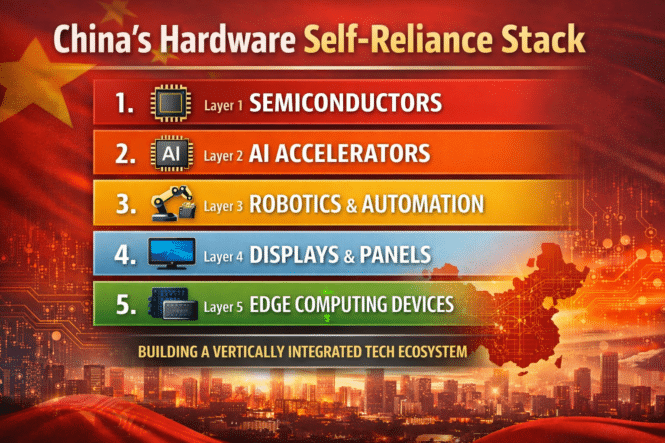
China’s Five-Year Plan (2026–2030) prioritizes technological self-reliance in critical hardware sectors including integrated circuits, sensors, robotics, and edge computing systems. The policy aims to reduce reliance on foreign supply chains while accelerating domestic innovation in components used in kiosks, PCs, and smart terminals.

Key Takeaway: China’s technology strategy is shifting from supply-chain dependence toward vertically integrated domestic hardware ecosystems.

Strategic Context: China’s Push for Technological Independence

China’s newly released Five-Year Plan outlines a national strategy to strengthen technological sovereignty in response to increasing global supply-chain tensions. Government policy documents released in early 2026 emphasize the need for “extraordinary measures” to achieve breakthroughs in integrated circuits and emerging technologies such as embodied AI and robotics.

For industries reliant on digital infrastructure—including self-service kiosks, thin clients, and industrial PCs—these policy priorities are particularly significant. Technology ecosystems involving companies such as IntelNVIDIA, and numerous Chinese semiconductor manufacturers are closely watching how China restructures its domestic supply chain.

Integrated Circuits and Edge Computing Hardware

A core pillar of the new plan is the expansion of China’s domestic integrated circuit (IC) industry. Investments are being directed toward advanced semiconductor manufacturing, chip design, and packaging technologies.

This push is expected to influence several hardware categories relevant to the self-service industry:

  • Industrial PCs and embedded systems

  • Thin clients and edge-computing devices

  • AI-enabled kiosks and service terminals

By strengthening local semiconductor production, China aims to reduce dependency on imported processors and accelerate the development of specialized chips optimized for AI inference and edge workloads.

Embodied AI and Robotics Development

Another notable priority within the plan is embodied AI, which refers to artificial intelligence integrated into physical systems such as humanoid robots and intelligent machines.

These technologies are expected to influence multiple sectors:

  • Automated retail environments

  • Smart hospital service systems

  • Logistics and warehouse automation

  • Public service and transportation terminals

For the kiosk and self-service industries, embodied AI could lead to more interactive service environments where robots and smart terminals operate together as part of a unified digital infrastructure.

Market Impact on Global Hardware Competition

China’s long-term investment in semiconductor manufacturing and intelligent hardware could significantly reshape global pricing and innovation dynamics. By expanding domestic production of components such as processors, sensors, and industrial controllers, Chinese manufacturers may reduce hardware costs and accelerate development cycles.

Industry analysts suggest that this strategy could allow Chinese hardware producers to compete aggressively in international markets, particularly in sectors such as kiosks, thin clients, and embedded computing systems.

Conclusion: A Structural Shift in Global Hardware Innovation

China’s 15th Five-Year Plan signals a decisive shift toward technology self-reliance and vertically integrated hardware ecosystems. By prioritizing semiconductors, sensors, robotics, and AI-enabled infrastructure, the country is positioning itself to expand its role in global digital hardware markets.

For the self-service technology sector, these developments could influence everything from kiosk component sourcing to the evolution of AI-enabled terminals, making China a central driver of next-generation hardware innovation.

TingTing Yang